Solution of Chapter 18. Pollution of Air and Water (NCERT Science Exemplar Book)
Chapter Exercises
Multiple Choice Questions
Air is a mixture of various gases. One of the gases is 21% part of the air and is essential for the survival of human beings. This gas is
view answer >Which of the following is not a source of air pollution?
view answer >Boojho wishes to contribute in reducing air pollution. Which vehicle should he use for going to school?
view answer >Which of the following is not a way to conserve water?
view answer >The type of pollution which is likely to affect Taj Mahal in Agra to a greater extent is
view answer >Incomplete combustion of fuel such as petrol and diesel gives:
view answer >The phenomenon of marble cancer is due to
view answer >Potable water is the water which is
view answer >Which of the following procedures will give you water free from all impurities?
view answer >A pond contains clean water. Which of the following activities will produce least pollution of water?
view answer >Trees help in reducing the pollution of our environment. Lakhs of trees are planted by people in the month of July every year. The occasion is called
view answer >Which of the following is not a green house gas?
view answer >Very Short Answer Type
Name the chemicals which are used in refrigerators and air conditioners and damage ozone layer when released in air.
view answer >Name any two sources which causes air pollution due to Suspended Particulate Matter
view answer >Name two gases which are mainly responsible for acid rain.
view answer >The quality of air at various locations is monitored regularly by government and other agencies. In what way can you use these data?
view answer >Combustion of fossil fuels generates a lot of air pollution. Can you suggest any two alternative sources of energy which do not cause any pollution?
view answer >Name any two water pollutants which are toxic for both plants and animals.
view answer >Short Answer Type
A lot of dry leaves are collected in a school garden and burnt every day. Do you think that it is right to do so? If not, what should we do to dispose off the dry leaves?
view answer >The level of air pollution is higher at a busy traffic intersection. Why?
view answer >Fill in the blanks with the help of words given in the bracket after each sentence.
(1) When air is contaminated by ________ substances which have a ________ effect on both the ________ and _______, it is referred to as ________.
(2) Many _______ are responsible for causing ________ pollution. Petroleum ________ are a major source of _______ pollutants like _______ and ________.
(Sulphur dioxide, refineries, industries, nitrogen dioxide, gaseous, liquid, people, air ).
(3) While ________ your teeth, leaving the ______ running may waste several ______ of water.
(tap, litres, brushing, washing, drops ).
(4) Water which is suitable for _______ is called _______ water.
(washing, bathing, drinking, potable, soft).
(5) Water which looks clean still has disease carrying _______ and _______ impurities.
(insects, micro organism, particles, dissolved, harmful).
view answer >
Match the items of Column A with those of Column B. Table
Find out the wrong statements and write them in their correct form.
(1) We can survive for some time without air but we cannot survive even for a few minutes without food.
(2) A brick kiln emits lot of smoke and other harmful gases causing air pollution.
(3) Carbon monoxide is produced by complete burning of fuels such as coal, petrol, diesel.
(4) Chlorination is a commonly used chemical method for killing germs in water.
(5) Water which is suitable for drinking is called soft water.
view answer >
In the following statements the underlined words are jumbled up. Write them in their correct form
(1) Air contains 78% ginroten and 21% goncxy.
(2) Vehicle produce high level of pollutants like carbon dioxide, nitrogen oxide, nobrac moondexi and mosek.
(3) Carbon dioxide, thaneme, nitrous oxide and water vapour are known as heengrouse sesga.
(4) Gangotri glacier in Himalaya has started melting because of lablog ringwam.
(5) Whenever harmful substances such as wagese, toxic chemicals, silt, etc. get mixed with water, the water becomes potdulle.
view answer >
Long Answer Type
What do CFCs stand for? Name some devices where CFCs are used. Why CFCs are considered as pollutants?
view answer >Why is it advised that industries should switch over to cleaner fuels such as CNG and LPG in the Taj Mahal zone in Agra?
view answer >It is said, "CO2 contributes to global warming". Explain?
view answer >We should plant trees and nurture the ones already present in the neighborhood. Why?
view answer >Explain traditional ways of purifying water to make it fit for drinking.
view answer >How do we reuse, reduce and recycle water?
view answer >Read the paragraph and answer the questions following it.
Water is essential for life. Without water there would be no life. We usually take water as granted for its purity, but we must ensure the quality of water. Pollution of water originates from human activities. Through different paths, pollution reaches to ground water. Easily identified source or place of pollution is called as point source, e.g. - municipal and industrial discharge pipes, where pollutants enter the water source. Non-point sources of pollution are those where a source of pollution cannot be easily identified, e.g. - agricultural runoff, acid rain etc.
(i) How do you classify the various sources of water pollution?
(ii) What are the point sources of water pollution?
(iii) Name any two non-point sources of water pollution?
view answer >
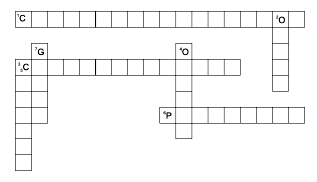
Complete the crossword puzzle with the help of clues given below:

view answer >