Evaluate the following limits:

As we need to find 
We can directly find the limiting value of a function by putting the value of the variable at which the limiting value is asked if it does not take any indeterminate form (0/0 or ∞/∞ or ∞-∞, .. etc.)
Let Z = 
∴ we need to take steps to remove this form so that we can get a finite value.
Note: While modifying be careful that you don’t introduce any zero terms in the denominator
As 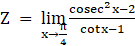

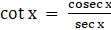
∵ 

⇒ Z = 
{Using basic limits algebra}

∵ (1- 2sin2x) = cos 2x 
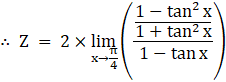

As, a2 – b2 = (a+b)(a-b)
⇒ Z = 
Now put the value of x, we have-
∴ Z = 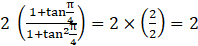
Hence,
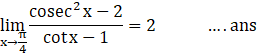
2