Solution of Chapter 13. limits and derivatives (NCERT - Maths Book)
Chapter Exercises
Exercise 13.1
Evaluate the following limits in Exercises.

Evaluate the following limits in Exercises.
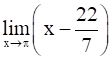
Evaluate the following limits in Exercises.

Evaluate the following limits in Exercises.

Evaluate the following limits in Exercises.
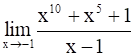
Evaluate the following limits in Exercises.
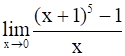
Evaluate the following limits in Exercises.
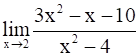
Evaluate the following limits in Exercises.
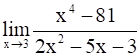
Evaluate the following limits in Exercises.

Evaluate the following limits in Exercises.

Evaluate the following limits in Exercises.
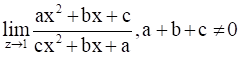
Evaluate the following limits in Exercises.

Evaluate the following limits in Exercises.

Evaluate the following limits in Exercises.
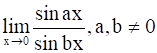
Evaluate the following limits in Exercises.
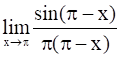
Evaluate the following limits in Exercises.

Evaluate the following limits in Exercises.
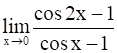
Evaluate the following limits in Exercises.
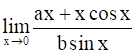
Evaluate the following limits in Exercises.

Evaluate the following limits in Exercises.
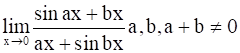
Evaluate the following limits in Exercises.
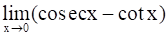
Evaluate the following limits in Exercises.

Find  and
and  , where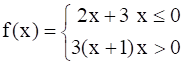
Find  , where
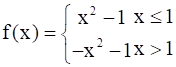
Evaluate  , where f(x) =
Find , where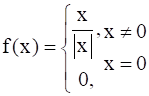
Find  , where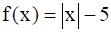
Suppose 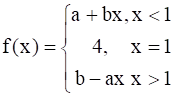
and if  = f (1) what are possible values of a and b?
Let a1, a2,… , an be fixed real numbers and define a function
f (x) = ( x − a1) ( x − a2)...( x − an) .
What is  ? For some
  compute
  .
.
If 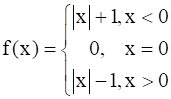 For what value (s) of a does
  exists?
If the function f(x) satisfies 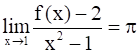 , evaluate
If 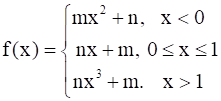 For what integers m and n does both
  and
and  exist?
Exercise 13.2
Find the derivative of x2 – 2 at x = 10.
view answer >Find the derivative of 99x at x = l00.
view answer >Find the derivative of x at x = 1.
view answer >Find the derivative of the following functions from first principle.
x3 – 27
view answer >Find the derivative of the following functions from first principle.
(x −1) (x − 2)
view answer >Find the derivative of the following functions from first principle.

Find the derivative of the following functions from first principle.

For the function 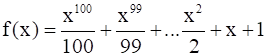 .Prove that f’ (1) =100 f’ (0).
Find the derivative of  for some fixed real number a.
For some constants a and b, find the derivative of
(x − a) (x − b)
view answer >For some constants a and b, find the derivative of

For some constants a and b, find the derivative of

Find the derivative of  for some constant a.
Find the derivative of

Find the derivative of

Find the derivative of

Find the derivative of
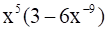
Find the derivative of

Find the derivative of
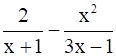
Find the derivative of cos x from first principle.
view answer >Find the derivative of the following functions:
sin x cos x
view answer >Find the derivative of the following functions:
sec x
view answer >Find the derivative of the following functions:
5sec x + 4cos x
view answer >Find the derivative of the following functions:
cosec x
view answer >Find the derivative of the following functions:
3 cot x + 5 cosec x
view answer >Find the derivative of the following functions:
5 sin x – 6 cos x + 7
view answer >Find the derivative of the following functions:
2tan x – 7sec x
view answer >Miscellaneous Exercise
Find the derivative of the following functions from first principle:
–x
view answer >Find the derivative of the following functions from first principle:
(-x)-1
view answer >Find the derivative of the following functions from first principle:
sin (x + 1)
view answer >Find the derivative of the following functions from first principle:
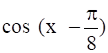
Find the derivative of the following functions (it is to be understood that a, b, c, d, p, q, r and s are fixed non-zero constants and m and n are integers): (x + a)
view answer >Find the derivative of the following functions (it is to be understood that a, b, c, d, p, q, r and s are fixed non-zero constants and m and n are integers):
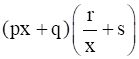
Find the derivative of the following functions (it is to be understood that a, b, c, d, p, q, r and s are fixed non-zero constants and m and n are integers):
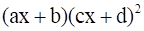
Find the derivative of the following functions (it is to be understood that a, b, c, d, p, q, r and s are fixed non-zero constants and m and n are integers):

Find the derivative of the following functions (it is to be understood that a, b, c, d, p, q, r and s are fixed non-zero constants and m and n are integers):
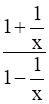
Find the derivative of the following functions (it is to be understood that a, b, c, d, p, q, r and s are fixed non-zero constants and m and n are integers):
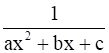
Find the derivative of the following functions (it is to be understood that a, b, c, d, p, q, r and s are fixed non-zero constants and m and n are integers):
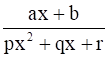
Find the derivative of the following functions (it is to be understood that a, b, c, d, p, q, r and s are fixed non-zero constants and m and n are integers):
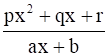
Find the derivative of the following functions (it is to be understood that a, b, c, d, p, q, r and s are fixed non-zero constants and m and n are integers):
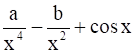
Find the derivative of the following functions (it is to be understood that a, b, c, d, p, q, r and s are fixed non-zero constants and m and n are integers):

Find the derivative of the following functions (it is to be understood that a, b, c, d, p, q, r and s are fixed non-zero constants and m and n are integers):
(ax + b)n
view answer >Find the derivative of the following functions (it is to be understood that a, b, c, d, p, q, r and s are fixed non-zero constants and m and n are integers):

Find the derivative of the following functions (it is to be understood that a, b, c, d, p, q, r and s are fixed non-zero constants and m and n are integers):
sin (x+a)
view answer >Find the derivative of the following functions (it is to be understood that a, b, c, d, p, q, r and s are fixed non-zero constants and m and n are integers):
cosec x cot x
view answer >Find the derivative of the following functions (it is to be understood that a, b, c, d, p, q, r and s are fixed non-zero constants and m and n are integers):

Find the derivative of the following functions (it is to be understood that a, b, c, d, p, q, r and s are fixed non-zero constants and m and n are integers):
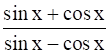
Find the derivative of the following functions (it is to be understood that a, b, c, d, p, q, r and s are fixed non-zero constants and m and n are integers):

Find the derivative of the following functions (it is to be understood that a, b, c, d, p, q, r and s are fixed non-zero constants and m and n are integers): 
Find the derivative of the following functions (it is to be understood that a, b, c, d, p, q, r and s are fixed non-zero constants and m and n are integers):

Find the derivative of the following functions (it is to be understood that a, b, c, d, p, q, r and s are fixed non-zero constants and m and n are integers):

Find the derivative of the following functions (it is to be understood that a, b, c, d, p, q, r and s are fixed non-zero constants and m and n are integers):

Find the derivative of the following functions (it is to be understood that a, b, c, d, p, q, r and s are fixed non-zero constants and m and n are integers):
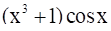
Find the derivative of the following functions (it is to be understood that a, b, c, d, p, q, r and s are fixed non-zero constants and m and n are integers):

Find the derivative of the following functions (it is to be understood that a, b, c, d, p, q, r and s are fixed non-zero constants and m and n are integers):

Find the derivative of the following functions (it is to be understood that a, b, c, d, p, q, r and s are fixed non-zero constants and m and n are integers):
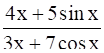
Find the derivative of the following functions (it is to be understood that a, b, c, d, p, q, r and s are fixed non-zero constants and m and n are integers):

Find the derivative of the following functions (it is to be understood that a, b, c, d, p, q, r and s are fixed non-zero constants and m and n are integers):

Find the derivative of the following functions (it is to be understood that a, b, c, d, p, q, r and s are fixed non-zero constants and m and n are integers):

Find the derivative of the following functions (it is to be understood that a, b, c, d, p, q, r and s are fixed non-zero constants and m and n are integers):
