Q2 of 24 Page 16

In a quadrilateral, define each of the following:

(i) Sides


(ii) Vertices


(iii) Angles


(iv) Diagonals


(v) Adjacent angles


(vi) Adjacents sides


(vii) Opposite sides


(viii) Opposite angles


(ix) Interior


(x) Exterior

Example:


(i) Sides: Sides are the edges of a quadrilateral. All the sides may have same of different length.


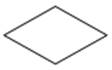
In the above figure AB, BC, CD and DA are sides.


(ii) Vertices


Vertices are the angular points where two sides or edges meet.


In the above figure vertices are A, B, C and D


(iii) Angles


Angle is the inclination inclination between two sides of a quadrilateral.


In the above figure angles are: ABC, BCA, CDA and DAB


(iv) Diagonals


Diagonals are the lines joining two opposite vertices of a quadrilateral.


In the above figure diagonals are: BD and AC


(v) Adjacent angles


Adjacent angles have one common arm.


In the above figure angles ABC, BCD are adjacent anges.


(vi) Adjacents sides


Adjacent sides make an angle.


In the above figure AB BC, BC CA, CD DA, DA AB are pairs of adjacent sides.


(vii) Opposite sides: Opposite sides don’t have anything in common like sides orv angles.


In the above figure AB CD, BC DA are the pairs of opposite sides.


(viii) Opposite angles


Opposite angles are made by non adjacent sides.


In the above figure angles A and C, angles B and D are opposite angles.


(ix) Interior


Interior means within the quadrilateral.


(x) Exterior


Exterior means outside of a quadrilateral. For example point B is exterior of quadrilateral.


More from this chapter

All 24 →
1

Define the following terms:

(i) Quadrilateral


(ii) Convex Quadrilateral

3

Complete each of the following, so as to make a true statement:

(i) A quadrilateral has ________ sides.


(ii) A quadrilateral has ________angles.


(iii) A quadrilateral has ________, no three of which are ________.


(iv) A quadrilateral has ________diagonals.


(v) The number of pairs of adjacent angles of a quadrilateral is ________.


(vi) The number of pairs of opposite angles of a quadrilateral is ________.


(vii) The sum of the angles of a quadrilateral is ________.


(viii) A diagonal of a quadrilateral is a line segment that joins two ________ vertices of the quadrilateral.


(ix) The sum of the angles of a quadrilateral is ________ right angles.


(x) The measure of each angle of a convex quadrilateral is ________ 180°.


(xi) In a quadrilateral the point of intersection of the diagonals lies in ________ of the quadrilateral.


(xii) A point os in the interior of a convex quadrilateral, if it is in the ________ of its two opposite angles.


(xiii) A quadrilateral is convex if for each side, the remaining ________ lie on the same side of the line containing the side.

4

In Fig. 16.19, ABCD is a quadrilateral.


(i) Name a pair of adjacent sides.


(ii) Name a pair of opposite sides.


(iii) How many pairs of adjacent sides are there?


(iv) How many pairs of opposite sides are there?


(v) Name a pair of adjacent angles.


(vi) Name a pair of opposite angles.


(vii) How many pairs of adjacent angles are there?


(viii) How many pairs of opposite angles are there?

5

The angles of a quadrilateral are 110°, 72°, 55° and x°. Find the value of x.