
Atoms of seven elements A, B, C, D, E, F and g have a different number of electronic shells but have the same number of electrons in their outermost shells. The elements A and C combine with chlorine to form and acid and common salt respectively. The oxide of element A is liquid at room temperature and is a neutral substance, while the oxide of the remaining six elements are basic in nature. Based on the above information, answer the following question:
(i) What could the element A be?
(ii) Will element A to G belong to the same period or same group of the periodic table?
(iii) Write the formula of the compound formed by the reaction of the element A with oxygen.
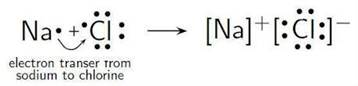
(iv) Show the formation of the compound by a combination of element C with chlorine with the help of electronic structure.
(v) What would be the ratio of number of combining atoms in a compound formed by the combination of element A with carbon?
(vi) Which one of the given elements is likely to have the smallest atomic radius?
(i) A will be hydrogen (H) because A, B, C, D, E, F and G all have same number of valence electrons so this means these elements belong to same group. Since element C combine to Cl and forms NaCl so these elements belong to 1 group. Only H form an acid on reaction with Cl in 1 group and its oxide is also neutral substance.
(ii) Elements A to G will belong to same group but periods will different because number of shells are different in all elements.
(iii) A is hydrogen (H) then the formula of the compound formed by the reaction of the element A with oxygen is H2O.
(iv) Element C is Na because C combine with chlorine and forms common salt (NaCl).
(v) A is H so the compound formed by the combination of element A with carbon will be CH4 and the ratio of combining atoms will be 4:1.
(vi) The element which has the smallest atomic radius is A.
Couldn't generate an explanation.
Generated by AI. May contain inaccuracies — always verify with your textbook.


