Q3 of 17 Page 156

Make a model of a sand clock which can measure a time interval of 2 minutes (Fig. 13.17).

1. Take one plastic cup and place it in upside down on a table. Put the other cup on the top of the first one so that the bottom parts of both cups touch each other.


2. Place two lids on the cups and make holes into them. And then invert one cup one another.


3. Measure the sand and put on top of one cup timer. Allow the sand to pass through the holes.


4. Place the cup timer on top of plate and note down the time taken by the sand to pass through the bottom of the timer.


5. Adjust the amount of sand until the time taken by it is 2 minutes for all the sand to pass through the bottom of the timer.


More from this chapter

All 17 →
13

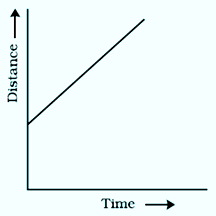
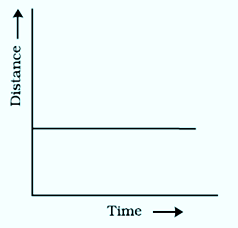
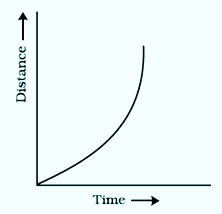
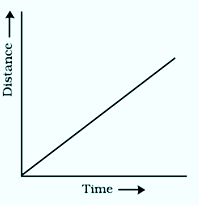
Which of the following distance-time graphs shows a truck moving with speed which is not constant?

(i)


(ii)


(iii)


(iv)

1

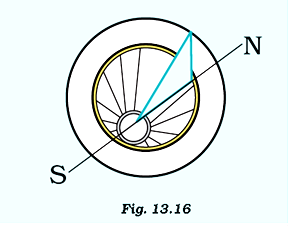
You can make your own sundial and use it to mark the time of the day at your place. First of all find the latitude of your city with the help of an atlas. Cut out a triangular piece of a cardboard such that its one angle is equal to the latitude of your place and the angle opposite to it is a right angle. Fix this piece, called gnomon, vertically along a diameter of a circular board a shown in Fig. 13.16. One way to fix the gnomon could be to make a groove along a diameter on the circular board.

Next, select an open space, which receives sunlight for most of the day. Mark a line on the ground along the North-South direction. Place the sundial in the sun as shown in Fig. 13.16. Mark the position of the tip of the shadow of the gnomon on the circular board as early in the day as possible, say 8:00 AM. Mark the position of the tip of the shadow every hour throughout the day. Draw lines to connect each point marked by you with the centre of the base of the gnomon as shown in Fig. 13.16. Extend the lines on the circular board up to its periphery. You can use this sundial to read the time of the day at your place. Remember that the gnomon should always be placed in the North-South direction as shown in Fig. 13.16.


2

Collect information about time measuring devices that were used in the ancient times in different parts of the world. Prepare a brief write up on each one of them. The write up may include the name of the device, the place of its origin, the period when it was used, the unit in which the time was measured by it and a drawing or a photograph of the device, if available.

4

You can perform an interesting activity when you visit a park to ride a swing. You will require a watch. Make the swing oscillate without anyone sitting on it. Find its time period in the same way as you did for the pendulum. Make sure that there are no jerks in the motion of the swing. Ask one of your friends to sit on the swing. Push it once and let it swing naturally. Again, measure its time period. Repeat the activity with different persons sitting on the swing. Compare the time period of the swing measured in different cases. What conclusions do you draw from this activity?