Skip to content
Philoid
Browse Saved
Back to chapter
Maths
1. Relations and Functions
Home · Class 12 · Maths · Mathemetics Part-I · 1. Relations and Functions
Prev
Next
Q12 of 107 Page 18

Let f: X → Y be an invertible function. Show that the inverse of f–1 is f, i.e., (f–1)–1 = f.

It is given that f: X → Y be an invertible function.

Then, there exists a function g: Y → X such that gof = Ix and fog = Iy.


Then, f-1 = g.


Now, gof = Ix and fog = Iy


⇒ f-1of = Ix and fof-1 = Iy


Thus, f-1: Y→X is invertible and f is the inverse of f-1.


Therefore, (f-1)-1 = f.


More from this chapter

All 107 →
10

Let f: X → Y be an invertible function. Show that f has unique inverse.

(Hint: suppose g1 and g2 are two inverses of f. Then for all y ∈ Y,


fog1(y) = 1Y(y) = fog2(y). Use one-one ness of f).

11

Consider f: {1, 2, 3} → {a, b, c} given by f(1) = a, f(2) = b and f(3) = c. Find f–1 and show that (f–1)–1 = f.

13

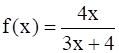
If f : R → R be given by , then fof (x) is

14

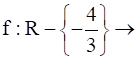
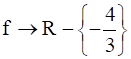
Let R be a function defined as . The inverse of f is the map g : Range given by

Questions · 107
1. Relations and Functions
1 1 1 1 1 2 3 4 5 6 7 8 9 9 10 10 10 10 10 11 12 13 14 15 16 1 2 2 2 2 2 3 4 5 6 7 7 8 9 10 11 12 1 2 3 3 4 5 5 5 6 7 8 9 10 11 12 13 14 1 1 1 1 1 2 2 2 2 2 2 3 4 5 6 7 8 9 9 9 9 9 9 10 11 12 12 13 1 2 3 4 5 6 7 8 9 10 11 11 12 13 14 15 16 17 18 19
Back to chapter
ADVERTISEMENT
About Contact Privacy Terms
Philoid · 2026
  • Home
  • Search
  • Browse
  • Quiz
  • Saved