Skip to content
Philoid
Browse Saved
Back to chapter
Chemistry
12. Organic Chemistry - Some Basic Principles and Techniques
Home · Class 11 · Chemistry · Chemistry Part-II · 12. Organic Chemistry - Some Basic Principles and Techniques
Prev
Next
Q15 of 51 Page 361

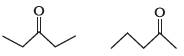
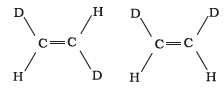
What is the relationship between the members of following pairs of structures?

Are they structural or geometrical isomers or resonance contributors?


The given structures are canonical structures or contributing structures. They are hypothetical and individually do not represent any real molecule. Hence, the given pairs represents resonance structures called resonance isomers.


More from this chapter

All 51 →
15

What is the relationship between the members of following pairs of structures?

Are they structural or geometrical isomers or resonance contributors?


15

What is the relationship between the members of following pairs of structures?

Are they structural or geometrical isomers or resonance contributors?


16

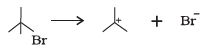
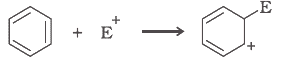
For the following bond cleavages, use curved-arrows to show the electron flow and classify each as homolysis or heterolysis. Identify reactive intermediate produced as free radical, carbocation and carbanion.

(a)


(b)


(c)


(d)

17

Explain the terms Inductive and Electromeric effects. Which electron displacement effect explains the following correct orders of acidity of the carboxylic acids?

(a) Cl3CCOOH > Cl2CHCOOH > ClCH2COOH


(b) CH3CH2COOH > (CH3)2CHCOOH > (CH3)3C.COOH

Questions · 51
12. Organic Chemistry - Some Basic Principles and Techniques
1 2 3 4 5 6 7 8 8 8 9 10 11 11 11 11 11 11 12 13 14 15 15 15 16 17 18 18 18 19 20 21 22 23 24 25 26 27 28 29 30 31 32 33 34 35 36 37 38 39 40
Back to chapter
ADVERTISEMENT
About Contact Privacy Terms
Philoid · 2026
  • Home
  • Search
  • Browse
  • Quiz
  • Saved