Skip to content
Philoid
Browse Saved
Back to chapter
Chemistry
12. Organic Chemistry - Some Basic Principles and Techniques
Home · Class 11 · Chemistry · Chemistry Part-II · 12. Organic Chemistry - Some Basic Principles and Techniques
Prev
Next
Q39 of 51 Page 361

The best and latest technique for isolation, purification and separation of organic compounds is:

(a) Crystallisation


(b) Distillation


(c) Sublimation


(d) Chromatography

Correct option is (d)


Chromatography is the most useful technique of separation and purification of organic compounds. It was first used to separate a mixture of coloured substances.


More from this chapter

All 51 →
36

In the organic compound CH2 = CH – CH2 – CH2– C ≡ CH, the pair of hydridised orbitals involved in the formation of: C2 – C3 bond is:

(a) sp – sp2 (b) sp – sp3


(c) sp2– sp3 (d) sp3 – sp3

37

In the Lassaigne’s test for nitrogen in an organic compound, the Prussian blue colour is obtained due to the formation of:

(a) Na4[Fe(CN)6] (b) Fe4[Fe(CN)6]3


(c) Fe2[Fe(CN)6] (d) Fe3[Fe(CN)6]4

38

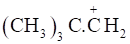
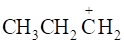
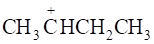
Which of the following carbocation is most stable?

(a)


(b)


(c)


(d)

40

The reaction:

CH3CH2I + KOH (aq) →CH3CH2OH + KI is classified as:


(a) electrophilic substitution


(b) nucleophilic substitution


(c) elimination


(d) addition

Questions · 51
12. Organic Chemistry - Some Basic Principles and Techniques
1 2 3 4 5 6 7 8 8 8 9 10 11 11 11 11 11 11 12 13 14 15 15 15 16 17 18 18 18 19 20 21 22 23 24 25 26 27 28 29 30 31 32 33 34 35 36 37 38 39 40
Back to chapter
ADVERTISEMENT
About Contact Privacy Terms
Philoid · 2026
  • Home
  • Search
  • Browse
  • Quiz
  • Saved