Skip to content
Philoid
Browse Saved
Back to chapter
2. Geometry
Home · Class 8 · · Exemplar Mathematics · 2. Geometry
Prev
Next
Q13 of 78 Page 23

A polygon has prime number of sides. Its number of sides is equal to the sum of the two least consecutive primes. The number of diagonals of the polygon is

2 least consecutive prime numbers are 2 and 3.

⇒ No. of sides = 5


⇒


⇒ d = 5


B.5 is correct

More from this chapter

All 78 →
11

If the sum of two angles is greater than 180°, then which of the following is not possible for the two angles?

12

If the sum of two angles is equal to an obtuse angle, then which of the following is not possible?

14

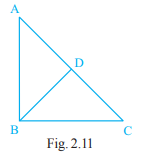
In Fig. 2.11, AB = BC and AD = BD = DC.

The number of isosceles triangles in the figure is


15

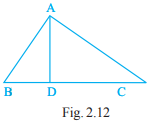
in Fig. 2.12,

∠BAC = 90° and AD ⊥ BC.


The number of right triangles in the figure is


Questions · 78
2. Geometry
1 2 3 4 5 6 7 8 9 10 11 12 13 14 15 16 17 18 19 20 21 22 23 24 25 26 27 28 29 30 31 32 33 34 35 36 37 38 39 40 41 42 43 44 45 46 47 48 49 50 51 52 53 54 55 56 57 58 59 60 61 62 63 64 65 66 67 68 69 70 71 72 73 74 75 76 77 78
Back to chapter
ADVERTISEMENT
About Contact Privacy Terms
Philoid · 2026
  • Home
  • Search
  • Browse
  • Quiz
  • Saved