Skip to content
Philoid
Browse Saved
Back to chapter
Maths
2. Geometry
Home · Class 8 · Maths · Exemplar Mathematics · 2. Geometry
Prev
Next
Q61 of 78 Page 23

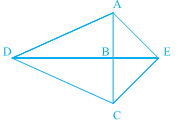
In Fig. 2.39.


(a) What is AE + EC?


(b) What is AC – EC?


(c) What is BD – BE?


(d) What is BD – DE?

(a) AE + EC = AC


(b) AC – EC = AE


(c) BD – BE = ED


(d) BD – DE = BE


More from this chapter

All 78 →
59

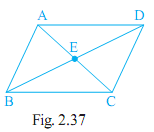
In Fig. 2.37,

(a) name any four angles that appear to be acute angles.


(b) name any two angles that appear to be obtuse angles.


60

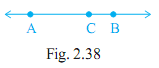
In Fig. 2.38,

(a) is AC + CB = AB?


(b) is AB + AC = CB?


(c) is AB + BC = CA?


62

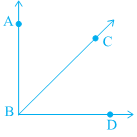
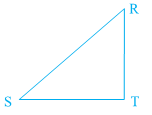
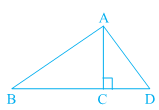
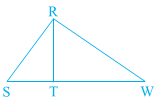
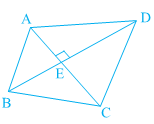
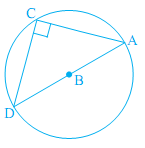
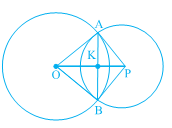
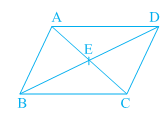
Using the information given, name the right angles in each part of Fig. 2.40:

(a) BA ⊥BD


(b) RT ⊥ST


(c) AC ⊥BD


(d) RS ⊥RW


(e) AC ⊥BD


(f) AE ⊥CE


(g) AC ⊥CD


(h) OP ⊥AB


Fig. 2.40

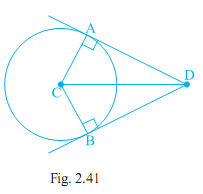
63

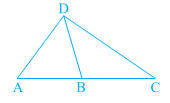
What conclusion can be drawn from each part of Fig. 2.41, if

(a) DB is the bisector of ∠ADC?


(b) BD bisects ∠ABC?


(c) DC is the bisector of ∠ADB, CA ⊥ DA and CB ⊥ DB?


Questions · 78
2. Geometry
1 2 3 4 5 6 7 8 9 10 11 12 13 14 15 16 17 18 19 20 21 22 23 24 25 26 27 28 29 30 31 32 33 34 35 36 37 38 39 40 41 42 43 44 45 46 47 48 49 50 51 52 53 54 55 56 57 58 59 60 61 62 63 64 65 66 67 68 69 70 71 72 73 74 75 76 77 78
Back to chapter
ADVERTISEMENT
About Contact Privacy Terms
Philoid · 2026
  • Home
  • Search
  • Browse
  • Quiz
  • Saved