Skip to content
Philoid
Browse Saved
Back to chapter
Chemistry
4. Chemical Bonding and Molecular Structure
Home · Class 11 · Chemistry · Chemistry - Exemplar · 4. Chemical Bonding and Molecular Structure
Prev
Next
Q35 of 68 Page 44

Why does type of overlap given in the following figure not result in bond formation?


in the figure (i) the area of the contact of ++ overlap is equal to the area of the +- overlap. The so-net overlap is zero.

In figure (ii) there is no overlap of the orbitals due to the different symmetry.


More from this chapter

All 68 →
33

Explain the shape of BrF5.

34

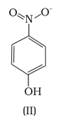
Structures of molecules of two compounds are given below :


(a) Which of the two compounds will have intermolecular hydrogen bonding and which compound is expected to show intramolecular hydrogen bonding.


(b) The melting point of a compound depends on, among other things, the extent of hydrogen bonding. On this basis explain which of the above two compounds will show higher melting point.


(c) Solubility of compounds in water depends on power to form hydrogen bonds with water. Which of the above compounds will form hydrogen bond with water easily and be more soluble in it.


36

Explain why PCl5 is trigonal bipyramidal whereas IF5 is square pyramidal.

37

In both water and dimethyl ether (CH3 —Ο — CH3 ), oxygen atom is central atom, and has the same hybridisation, yet they have different bond angles. Which one has greater bond angle? Give reason.

Questions · 68
4. Chemical Bonding and Molecular Structure
1 2 3 4 5 6 7 8 9 10 11 12 13 14 15 16 17 18 19 20 21 22 23 24 25 26 27 28 29 30 31 32 33 34 35 36 37 38 39 40 41 42 43 44 45 46 47 48 49 50 51 52 53 54 55 56 57 58 59 60 61 62 63 64 65 66 67 68
Back to chapter
ADVERTISEMENT
About Contact Privacy Terms
Philoid · 2026
  • Home
  • Search
  • Browse
  • Quiz
  • Saved