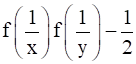
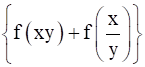
Mark the correct alternative in the following:
Let  and h(x) = f(x) g(x). Then, h(x) = 1 for

h(x)=1
f(x)g(x)=1

x≠0
Option D is correct.
AI is thinking…
Couldn't generate an explanation.
Generated by AI. May contain inaccuracies — always verify with your textbook.