Skip to content
Philoid
Browse Saved
Back to chapter
Maths
6. Application of Derivatives
Home · Class 12 · Maths · Mathemetics Part-I · 6. Application of Derivatives
Prev
Next
Q4 of 168 Page 242

Find the equation of the normal to curve x2 = 4y which passes through the point (1, 2).

It is given that curve is y2 = 4x.

Differentiating with respect to x, we get,


Now, the slope of the normal at point (1,2) is


Therefore, Equation of the normal at (1,2) is y - 2 = - 1(x – 1)


⇒ y - 2 = - x + 1


⇒ x + y - 3 = 0


More from this chapter

All 168 →
2

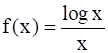
Show that the function given by has maximum at x = e.

3

The two equal sides of an isosceles triangle with fixed base b are decreasing at the rate of 3 cm per second. How fast is the area decreasing when the two equal sides are equal to the base?

5

Show that the normal at any point θ to the curve

x = a cosθ + a θ sinθ, y = a sinθ – aθ cosθ is at a constant distance from the origin.

6

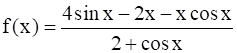
Find the intervals in which the function f given by


is (i) strictly increasing (ii) strictly decreasing.

Questions · 168
6. Application of Derivatives
1 2 3 4 5 6 7 8 9 10 11 12 13 14 15 16 17 18 1 2 3 4 5 6 6 6 6 6 7 8 9 10 11 12 13 14 15 16 17 18 18 1 2 3 4 5 6 7 8 9 10 11 12 13 14 14 14 14 14 15 16 17 18 19 20 21 22 23 24 25 26 27 1 1 1 1 1 1 1 1 1 1 1 1 1 1 1 2 3 4 5 6 7 8 9 1 1 1 1 2 2 2 2 2 3 3 3 3 3 3 3 3 4 4 4 5 5 5 5 6 7 8 9 10 11 12 13 14 15 16 17 18 19 20 21 22 23 24 25 26 27 28 29 1 1 2 3 4 5 6 7 8 9 10 11 12 13 14 15 16 17 18 19 20 21 22 23 24
Back to chapter
About Contact Privacy Terms
Philoid · 2026
  • Home
  • Search
  • Browse
  • Quiz
  • Saved