A battery of emf 100 V and a resistor of resistance 10 kΩ are joined in series. This system is used as a source to supply current to an external resistance R. If R is not greater than 100 Ω, the current through it is constant up to two significant digits. Find its value. This is the basic principle of a constant-current source.
10mA
Given,
Emf of the battery, E= 100V
Resistance of series resistor, r= 10kΩ=10000kΩ
Resistance of external resistor, R=0-100Ω
Formula used:
A constant-current source is a power source that supply constant current to an external load, even if there is a change in load resistance.
When the battery is connected to the external resistance that vary from 0 to 100 Ω, the effective resistance will change across the potential difference provided by the battery.

Solution:
Let’s find out the current when R=0Ω or when there is no external resistance is connected,
We know that, current i for a series resistor connection is

By substituting the known values, we get i as,

Now let’s take R as 2 Ω (or a low value like 1 Ω or so)
The value of current, i is
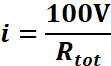
Where Rtot is the effective resistance across the battery. From the figure, Rtot can be calculated as,

Hence by putting R=2 Ω, we get i as,

Similarly, by putting R=100Ω , the highest possible, we get the current i as,

So, as the principle predicted, the value of the current, 1mA, does not change much, or it stays consistent till two significant digits.
Couldn't generate an explanation.
Generated by AI. May contain inaccuracies — always verify with your textbook.


