Q2 of 22 Page 1

Read the following passage carefully:

1. Although everybody has a creative spark, the potential is not always fully utilised. How does one recognize those who are developing their creative energies to the fullest? Mad painters and tormented poets are only comic stereotypes of the creative personality. The essential traits of creativity are found among a wide variety of less conspicuous creators, people in all walks of life. Unfortunately, the structure of our social and educational environment does not always promote its growth.


2. Generally speaking, creative people often believe their purpose in life is to discover and implement the interrelatedness of things, to make order out of disorder. They also see problems where others see none and question the validity of even the most widely accepted answers. Creative persons are compulsive problem seekers, not so much because they thrive on problems, but because their senses are attuned to a world that demands to be put together, like a jigsaw puzzle scattered on a table.


3. Several tests now in use reveal that highly creative people are much more open and receptive to the complexities of experience than are less creative people. The creative temperament has a tendency to break problems down into their most basic elements and then reconstruct them iijto whole new problems, thereby discovering new relationships and new solutions.


4. Highly creative people aren’t afraid to ask what may seem to be naive or silly questions. They ask questions like, “why don’t spiders get tangled up in their own webs?” and “why do dogs turn in circles before lying down?”. Such questions may seem childlike, and in a way they are. Children have not yet had their innate creative energies channelled into culturally acceptable directions and can give full rein to their curiosity—the absolute prerequisite for full creative functioning, in both children and adults.


5. Unlike children, creative people appear to have vast stores of patience to draw upon. Months, years, even decades can be devoted to a single problem.


6. The home that encourages inquisitiveness contributes to creative development. The


teacher who stresses questions rather than answers and rewards curiosity rather than restricting is teaching a child to be creative.


7. To be extremely intelligent is not the same as to be gifted in creative work. Tire Quiz Kids are often referred to as geniuses. They would undoubtedly score high in memory functions But it is doubtful whether they are also fluent in producing ideas.


8. Contrary to popular myths that glorify youth, more creative achievements are likely to occur when people grow older. While memory may falter with age, creativity is ageless.


Choose the most appropriate meaning of the given word from the options provided:


(a) The word “conspicuous” means


(b) The word “innate” means


(c) The word “naïve” means


(d) The word “fluent means

(a) (ii) noticeable


(b) (iii) natural and instinctive


(c) (ii) simple and innocent


(d) (i) to be able to express oneself articulately


More from this chapter

All 22 →
1

Read the following passage carefully.

ROMANCING THE RAIL


1. A couple of weeks ago, while detailing the many ways in which coping with the bleak economy can actually better our lives, I touched upon the romance of train travel and suggested that we would do ^ell to introduce our children to its charms.


I have to confess that I was surprised by the kind of response this triggered from readers with stories to tell of their own rail adventures.


2. Browsing through them reminded me yet again why trains have such a special place in our lives. Well, perhaps not in the lives of a generation brought up on the dubious pleasure of cheap air travel.


3. I still vividly recall every detail of my first such excursion, taking a train from Sealdah station in Calcutta to visit my aunt’s tea garden in Assam. I settled down at my window seat and even before the train had pulled out, I was burrowing deep into the pleasures of Indian mythology.


4. But as the scene outside grew more rustic, even picturesque, my attention wandered to the marvellous moving display outside my window. There were gentle rolling fields, green and lush, more palm trees than I could count and endless expanse of bright blue sky.


5. Just then, a man entered my peripheral vision. Scythe in hand, he was intently cutting down some tall grass in the fields. “Oh look,” I cried out to my mother, “It’s a farmer, a real-life farmer!” A city- bred child, I hadn’t realized until then that farmers actually had an independent existence outside of my story books.


6. That wasn’t the only discovery I made in the course of that first train journey or the many others to follow. Gazing out of the train window as I travelled across the country, I was introduced to a new India that was far removed from the bland boundaries of my middle-class urban existence. And Mike to believe today that this made me more aware of the complexities of the society that we live in.


On the basis of your reading of the above passage answer the following questions:


(a) Readers’ response to her suggestions made the writer realize……


(b) The pleasure/joys of travelling by train would not be appreciated by ……


(c) The writer was lured away from the pleasures of Indian mythology ……


(d) The two discoveries made during the train journey were ……


(e) Travelling by train enhanced the writer’s awareness of ….


(f) While travelling by train, the writer’s time was spent …...

2

Read the following passage carefully:

1. Although everybody has a creative spark, the potential is not always fully utilised. How does one recognize those who are developing their creative energies to the fullest? Mad painters and tormented poets are only comic stereotypes of the creative personality. The essential traits of creativity are found among a wide variety of less conspicuous creators, people in all walks of life. Unfortunately, the structure of our social and educational environment does not always promote its growth.


2. Generally speaking, creative people often believe their purpose in life is to discover and implement the interrelatedness of things, to make order out of disorder. They also see problems where others see none and question the validity of even the most widely accepted answers. Creative persons are compulsive problem seekers, not so much because they thrive on problems, but because their senses are attuned to a world that demands to be put together, like a jigsaw puzzle scattered on a table.


3. Several tests now in use reveal that highly creative people are much more open and receptive to the complexities of experience than are less creative people. The creative temperament has a tendency to break problems down into their most basic elements and then reconstruct them iijto whole new problems, thereby discovering new relationships and new solutions.


4. Highly creative people aren’t afraid to ask what may seem to be naive or silly questions. They ask questions like, “why don’t spiders get tangled up in their own webs?” and “why do dogs turn in circles before lying down?”. Such questions may seem childlike, and in a way they are. Children have not yet had their innate creative energies channelled into culturally acceptable directions and can give full rein to their curiosity—the absolute prerequisite for full creative functioning, in both children and adults.


5. Unlike children, creative people appear to have vast stores of patience to draw upon. Months, years, even decades can be devoted to a single problem.


6. The home that encourages inquisitiveness contributes to creative development. The


teacher who stresses questions rather than answers and rewards curiosity rather than restricting is teaching a child to be creative.


7. To be extremely intelligent is not the same as to be gifted in creative work. Tire Quiz Kids are often referred to as geniuses. They would undoubtedly score high in memory functions But it is doubtful whether they are also fluent in producing ideas.


8. Contrary to popular myths that glorify youth, more creative achievements are likely to occur when people grow older. While memory may falter with age, creativity is ageless.


On the basis of the reading of your reading of the passage, answer the following briefly: 8


(a) Why is every person not able to use his/her creativity fully?


(b) Write any two traits of creative people that you get to know from the passage.


(c) What are the most essential prerequisites for full creative functioning in children and adults?


(d) What kind of homes and teachers promote creativity among children?

3

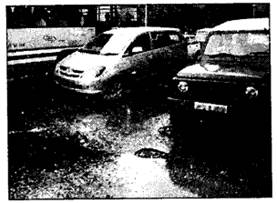
With the onset of the rainy season, the condition of the roads has become miserable. Based on the visual input and your own ideas, write a letter to the editor of the newspaper in about 100-120 words on why this is becoming a yearly affair. Give suggestions on what can be done about this. You are Rany’ Rama, 12, Pant Nagar, Agra.

3

You are Ankit/ Ankita. You visited the arctic region as part of an expedition. The melting of the ice caps and the rising water level alarmed you and made you realize the intensity of global warming. On your return you decide to write an article for a youth magazine on your concerns regarding the effects of global warming.


Based on the points given below and your own ideas, write an article in 100-120 words, on the Effects of Global Warming:


•Polar ice caps melt


•Water level rises-flooding of coastal areas


•Increased frequency of weather extremes-climate changes.