
Show that the function F(x) =  is
is
Differentiable at x = 0, if m > 1.
f(x) = 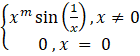
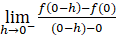
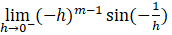
(LHD at x = 0) = 
= 
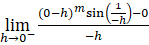
= 
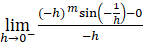
= 
= 
= 
= 0 * k [when - 1 ]
]
(RHD at x = 0) = 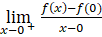
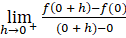
= 
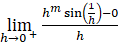
= 
= 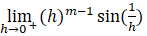 = 0
= 0
Since, (LHD at x = 0) = (RHD at x = 0)
Hence, f(x) is differentiable at x = 0
AI is thinking…
Couldn't generate an explanation.
Generated by AI. May contain inaccuracies — always verify with your textbook.


