Q10 of 50 Page 90

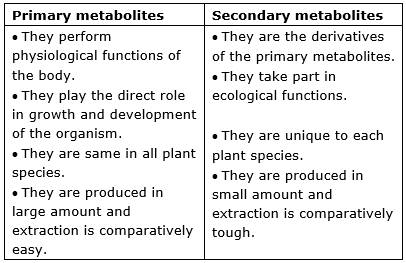
Write differences (AS1)

Primary metabolites and secondary metabolites

Primary metabolites and secondary metabolites


More from this chapter

All 50 →
10

Write differences (AS1)

Kidney and artificial kidney

10

Write differences (AS1)

Excretion and secretion

11

There is a pair of bean-shaped organs ‘P’ in the human body towards the back, just above the waist. A waste product ‘Q’ formed by the decomposition of unused proteins in liver is brought into organ ‘P’ through blood by an artery ‘R’. The numerous tiny filters ‘S’ present in organ ‘P’ clean the dirty blood goes into circulation through a vein ‘T’. The waste substance ‘Q’ and other waste salts and excess water form a yellowish liquid ‘U’ which goes from organ ‘P’ into a bag like structure ‘V’ through two tubes ‘W’. This liquid is then thrown out of the body through a tube ‘X’. (AS1)

A. What is (i) organ P and (ii) waste substance Q.


B. Name (i) artery R and (ii) vein T


C. What are tiny filters S known as?


D. Name (i) liquid U (ii) structure V (iii) tubes W (iv) tube X.

12

The organ ‘A’ of a person has been damaged completely due to a poisonous waste material ‘B’ has started accumulation in his blood, making it dirty. In order to save this person’s life, the blood from an artery in the person’s arm is made to flow into long tubes made of substance ‘E’ which are kept in coiled form in a tank containing solution ‘F’. This solution contains three materials ‘G’, ‘H’ and ‘I’ similar proportions to those in normal blood. As the person’s blood passes through long tubes of substance ‘E’, most if the wastes present in it go into solution ‘F’. The clean blood is then put back into a vein in the person for circulation. (AS1)

A. What is organ A?


B. Name the waste substance B.


C. What are (i) E, and (ii) F?


D. What is the process described above known as?