
Evaluate the following integrals as a limit of sums:


We know,

where,

Let,

Here, f(x) = x

Now, By putting x = a in f(x) we get,
f(a) = a
Similarly, f(a + h) = a + h

In this series, a is getting added n times

Now take h common in remaining series



Put,

Since,







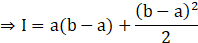
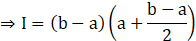

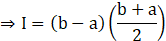
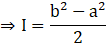

AI is thinking…
Couldn't generate an explanation.
Generated by AI. May contain inaccuracies — always verify with your textbook.


