
If  represent two adjacent sides of a parallelogram, then write vectors representing its diagonals.
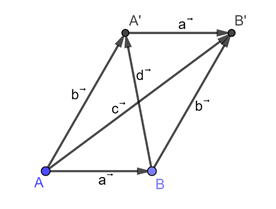
In the above figure, 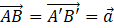 ,
, 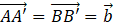 ,
,  and
and

Using parallelogram law of vector addition, we can say that
 and
and  or
or 
Also,  are the diagonals of the parallelogram.
Hence the diagonal vectors of a parallelogram formed by vectors  and
and  will be
  ) and
) and  .
.
AI is thinking…
Couldn't generate an explanation.
Generated by AI. May contain inaccuracies — always verify with your textbook.


