Q14 of 52 Page 24

Read the bar graph given in Fig. 23.18 and answer the following questions:


(i) What information does it give?


(ii) In which part the expenditure on education is maximum in 1990?


(iii) In which part the expenditure has gone up from 1980 to 1990?


(iv) In which part the gap between 1980 and 1990 is maximum?

(i) It gives the information about the public expenditure on education by various states sub continents.

(ii) In Africa the expenditure education is maximum in 1980.


(iii) In East Africa the expenditure has gone by from 1980-90


(iv) In Africa the gap between 1980 and 1990 is maximum.


More from this chapter

All 52 →
12

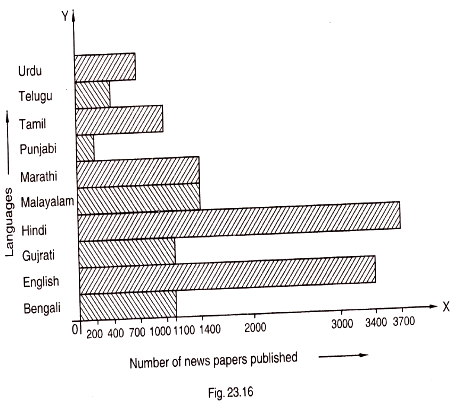
The bar graph shown in Fig. 23.16 represents the circulation of newspapers in 10 languages.

Study the bar graph and answer the following questions:


(i) What is the total number of newspapers published in Hindi, English, Urdu, Punjabi and Bangali?


(ii) What percent is the number of newspapers published in Hindi of the total number of newspapers?


(iii) Find the excess of the number of newspapers published in English over those published in Urdu.


(iv) Name two pairs of languages which publish the same number of newspapers.


(v) State the language in which the smallest number of newspapers are published.


(vi) State the language in which the largest number of newspapers are published.


(vii) State the language in which the number of newspapers published is between 2500 and 3500.


(viii) State whether true or False:


(a) The number of newspapers published in Malayalam and Marathi together is less than those published in English.


(b) The number of newspapers published in Telugu is more than those published in Tamil.

13

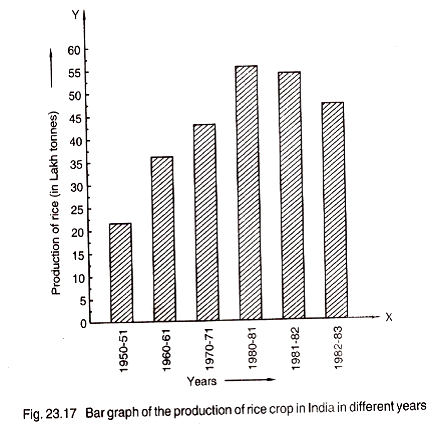
Read the bar graph given in Fig. 23.17 and answer the following questions:


(i) What information is given by the bar graph?


(ii) What was the crop-production of rice in 1970-71?


(iii) What is the difference between the maximum and minimum production of rice?

15

Read the bar graph given in Fig. 23.19 and answer the following questions :


(i) What information is given by the bar graph?


(ii) In which years the areas under the sugarcane crop were the maximum and the minimum?


(iii) State whether true or false:


The area under the sugarcane crop in the year 192-3 is three times that of the year 1950-51.

16

Read the bar graph given in Fig. 23.20 and answer the following questions:


(i) What information is given by the bar graph?


(ii) What was the expenditure on health and family planning in the year 1982-83?


(iii) In which year is the increase in expenditure maximum over the expenditure in previous year? What is the maximum increase?