
i) Write a chemical equation of each of the following types of chemical reactions of organic compounds.
a. Oxidation reaction
b. Addition reaction
c. Substitution reaction
ii) What is ethanol? What happens when it is heated with excess conc. H2SO4 at 443 K? Write the role of conc. H2SO4 in this reaction.
i) a. Oxidation reaction:
Carbon compounds can be easily oxidised on combustion. This is called an oxidation reaction. A chemical equation for a reaction in which alcohol (ethanol) is converted to carboxylic acid (acetic acid):

b. Addition reaction:
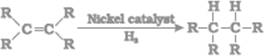
When unsaturated hydrocarbons add hydrogen in the presence of catalyses such as palladium or nickel to give saturated hydrocarbons. This process is called an addition reaction.
Industrial application: The above reaction is used in the hydrogenation of vegetable oils using a nickel catalyst. Vegetable oils generally have long unsaturated carbon chains.
c) Substitution reaction:
A reaction in which one type of atom or a group of atoms takes the place of another. Example: In the presence of sunlight, chlorine is added to hydrocarbons in a very fast reaction. Chlorine can replace the hydrogen atoms one by one. The chemical reaction is given as:
CH4 + Cl2→ CH3Cl + HCl (in the presence of sunlight)
ii) Ethanol is an organic compound. It is a liquid at room temperature. Ethanol is commonly called alcohol. It is also used in medicines such as tincture iodine, cough syrups, and many tonics. Ethanol is also soluble in water in all proportions. Consumption of small quantities of dilute ethanol causes drunkenness.
When ethanol is heated at 443K with an excess of concentrated sulphuric acid, it gives an unsaturated hydrocarbon. The ethanol gets dehydrated to form ethane. The reaction is given as:
CH3—CH2OH + Hot conc. H2SO4→ CH2=CH2
Ethanol Ethene
The concentrated sulphuric acid can be regarded as a dehydrating agent which removes water from ethanol.
Couldn't generate an explanation.
Generated by AI. May contain inaccuracies — always verify with your textbook.