
i. Explain why the rate of photosynthesis in plants is low both at lower and higher temperatures.
ii. Is green light most or least useful in photosynthesis and why?
OR
Why does absorption of digested food occur mainly in the small intestine?
i. Photosynthesis is an enzymatic process.
At Low Temperature
Enzymes are protein molecules used by living organisms to carry out biochemical reactions. The proteins are folded into a very particular shape, and this allows them to bind efficiently to the molecules of interest. At low temperatures, between 32 and 50 degrees Fahrenheit – 0 and 10 degrees Celsius – the enzymes that carry out photosynthesis do not work efficiently, and this decreases the photosynthetic rate. This leads to a decrease in glucose production and will result in stunted growth.
At High Temperatures
At temperatures above 68 degrees Fahrenheit, or 20 degrees Celsius, the rate of photosynthesis decreases because the enzymes do not work as efficiently at this temperature. This is despite the increase of carbon dioxide diffusion into leaves. At a temperature above 104 degrees Fahrenheit – 40 degrees Celsius – the enzymes that carry out photosynthesis lose their shape and functionality, and the photosynthetic rate declines rapidly. The graph of photosynthetic rate versus temperature presents a curved appearance with the peak rate occurring close to room temperature.
ii. Chlorophyll is the pigment used in the process of photosynthesis for light absorption. Green light is least useful in photosynthesis, because chlorophyll does not absorb green light. The light harvesting complexes mostly absorbs blue and red light to carry out photosynthesis.
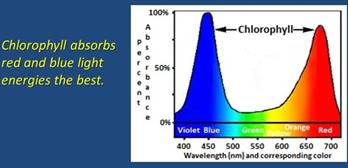
Also the green colour appears to our eyes due to reflection because as sunlight falls (which is called white light and is composed of VIBGYOR) and we observe it, then all the colours get absorbed but green gets reflected back, and hence we see it as green.
OR
The small intestine is the part of the gastrointestinal tract (also called the 'digestive tract' and the alimentary canal) located after the stomach and before the large intestine. It is the part of the digestive tract where approx 90% of the digestion and absorption of food occurs, the other 10% taking place in the stomach and large intestine.
That is, absorption of the nutrients and minerals in the food ingested, usually via the mouth, at an earlier stage in the digestive process.
Digestion in the Small Intestine
Digestion is the process by which ingested (food) material is broken down into a form that can then be absorbed, then assimilated into the tissues of the body.
It is one of the main stages in the digestive process and takes two forms:
• Mechanical digestion (e.g. chewing, grinding, churning, mixing), and
• Chemical digestion (e.g. action of digestive enzymes, bile, acids, etc.).
Chemical digestion occurs in the small intestine (and, to a lesser extent, also in some other part of the gastrointestinal tract - incl. the action of saliva on food in the mouth and the actions of some chemicals secreted by cells located in the lining of the stomach).
The three main categories of nutrients that undergo digestion within the small intestine are proteins, lipids (fats) and carbohydrates.
Absorption in the Small Intestine
In order for digested material to be absorbed into the bloodstream it must first be broken-down into particles that are small enough to pass, or "be transported", across the epithelial cells of the gastrointestinal tract.
Absorption is the uptake of fluids or other substances by the tissues of the body.
Digested material is absorbed into the bodily fluids (blood and lymph). Most of the absorption part of the digestive process occurs in the jejunum and the ileum of the small intestine, though alcohol is readily absorbed through the stomach.
Assimilation is the process by which broken-down parts, e.g. the chemical components of, or derived from, ingested food and beverages are taken into the cells of the body.
Digested material may be transported into blood vessels in the wall of the small intestine by the processes of simple/passive diffusion, facilitated diffusion, primary active transport, or secondary active transport.
The structure of the small intestine is suited to these processes of absorption due to its very large surface area. That is best explained using a diagram of the anatomy of the small intestine. Briefly, the inside surfaces of small intestine have many folds called plicae circulares, from which project many tiny finger-like structures of tissue called villi. The individual epithelial cells also have finger-like projections, which are called known as microvilli.
The function of the 3 structures, (1) the plicae circulares, (2) the villi and (3) the microvilli is to: Increase the surface area available for the absorption of nutrients.
Couldn't generate an explanation.
Generated by AI. May contain inaccuracies — always verify with your textbook.