
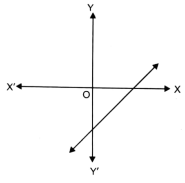
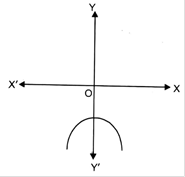
The graphs of y = p(x) are given in the figures below, where p(x) is a polynomial Find the number of zeroes in each case.
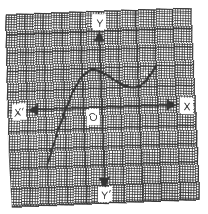
(i)  (ii)
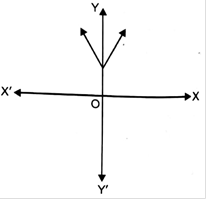
(ii) 
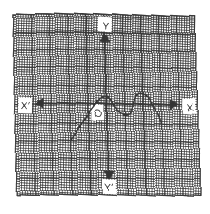
(iii)  (iv)
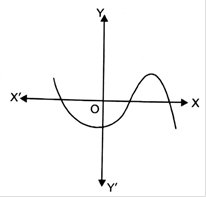
(iv) 
(v)  (vi)
(vi) 
(i) Here, the graph of y = p(x) intersect the x – axis at zero points. So, the number of zeroes is 0.
(ii) Here, the graph of y = p(x) intersects the x – axis at two points. So, the number of zeroes is 2.
(iii) Here, the graph of y = p(x) intersects the x – axis at four points. So, the number of zeroes is 4.
(iv) Here, the graph of y = p(x) does not intersects the x – axis. So, the number of zeroes is 0.
(v) Here, the graph of y = p(x) intersects the x – axis at two points. So, the number of zeroes is 2.
(vi) Here, the graph of y = p(x) intersects the x – axis at two points. So, the number of zeroes is 2.
Couldn't generate an explanation.
Generated by AI. May contain inaccuracies — always verify with your textbook.
 (ii)
(ii) 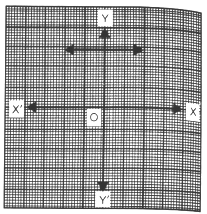
 (iv)
(iv) 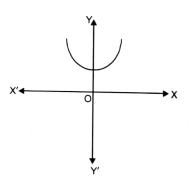
 (ii)
(ii) 
 (iv)
(iv) 
 (vi)
(vi)