Q4 of 95 Page 94

The diagram below shows part of the capillary bed in an organ of the human body. Some of the blood arriving at the capillaries at points labelled A, moves out into the spaces between the tissue cells. Study the diagram and answer the questions that follow:


(a) When the liquid from the blood surrounds the cells, what is it called?


(b) Name any one important component of the blood which remains inside the capillaries and fails to move out into the spaces.


(c) Some of the liquid surrounding the cells does not pass directly back into the blood but eventually reaches it by another route through vessel X. Name the fluid present in vessel X.


(d) State two important functions performed in our body by the fluid present in the vessel X.

(a) When the liquid from the blood surrounds the cells it is called tissue fluid.


(b) RBC's remain inside the capillaries & fails to move out into space.


(c) The fluid present in vessel X is lymph.


(d) Two important functions of lymph are :


1. Supplies nutrition and oxygen to those parts where blood cannot reach.


2. Lymphocytes and monocytes of lymph function to defend the body.


More from this chapter

All 95 →
2

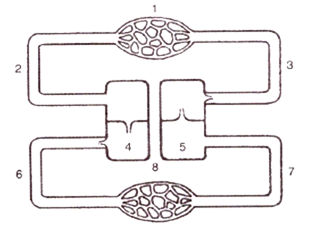
Given below is a highly schematic diagram of the human blood circulatory system.


(a) Which part (state the number) represents the heart? Give reason in support of your answer.


(b) Which numbers represent the following respectively?


Aorta


Renal vein


Hepatic portal vein


Stomach


Pulmonary artery


Dorsal aorta


Superior vena cava


3

Given on the next page is a simple diagram o circulation of blood in a mammal showing the blood vessels, the heart, lungs and body tissues. The blood vessel, labelled 6, contains deoxygenated blood and the valve leading to it has three semi-lunar pockets.


(a) Name the blood vessels and organs marked by numbers 1 to 8.


(b) What is meant by the term 'double circulation' of blood in mammals?


(c) What is diastole?

5

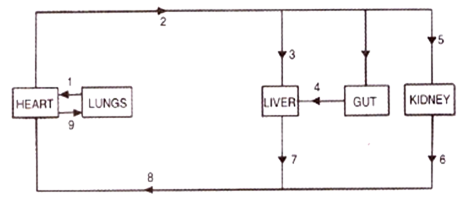
The following simplified diagram refers to the outline plan of the circulation of blood in a mammal. Study the diagram and write the number and the name of the blood vessel in each case as mentioned ahead.


(a) Several hours after a meal containing a lot of protein, which vessel will contain the highest concentration of urea?


(b) Which vessel would contain the highest concentration of amino acids and glucose soon after a meal?,

6

The figures given below show diagrammatic cross sections of three kinds of blood vessels.


(a) Identify the blood vessels A, B and C.


(b) Name the parts labelled 1-4.


(c) Mention two structural differences between A and B.


(d) Name the kinds of blood that flow through A and through B respectively


(e) In which one of the above vessels referred to in (a) above does the exchange of gases actually take place?