
Evaluate the integral:

I =
As we can see that there is a term of x in numerator and derivative of x2 is also 2x. So there is a chance that we can make a substitution for x2 + 6x + 13 and I can be reduced to a fundamental integration.
As 
∴ Let, 2x – 3 = A(2x + 6) + B
⇒ 2x – 3 = 2Ax + 6A + B
On comparing both sides –
We have,
2A = 2 ⇒ A = 1
6A + B = –3 ⇒ B = –3–6A = –9
Hence,
I = 
∴ I = 
Let, I1 = and I2 =
Now, I = I1 – 9I2 ….eqn 1
We will solve I1 and I2 individually.
As, I1 = 
Let u = x2 + 6x + 13 ⇒ du = (2x + 6)dx
∴ I1 reduces to 
Hence,
I1 = 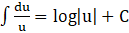 {∵
{∵ 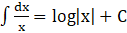 }
}
On substituting value of u, we have:
I1 =  ….eqn 2
As, I2 =  and we don’t have any derivative of function present in denominator. ∴ we will use some special integrals to solve the problem.
As denominator doesn’t have any square root term. So one of the following two integrals will solve the problem.

Now we have to reduce I2 such that it matches with any of above two forms.
We will make to create a complete square so that no individual term of x is seen in denominator.
∴ I2 = 
⇒ I2 = 
Using: a2 + 2ab + b2 = (a + b)2
We have:
I2 = 
I2 matches with 
∴ I2 =  …eqn 3
From eqn 1:
I = I1 – 9I2
Using eqn 2 and eqn 3:
I = 
I = 
Couldn't generate an explanation.
Generated by AI. May contain inaccuracies — always verify with your textbook.


