
(a)Draw a ray diagram of a compound microscope for the final image formed at least distance of distinct vision?
(b) An angular magnification of 30X is desired using an objective of focal length 1.25 cm and an eye piece of focal length 5 cm. How will you set up the compound microscope for the final image formed at least distance of distinct vision?
OR
(a) Draw a ray diagram of an astronomical telescope for the final image formed at least distance of distinct vision?
(b) An astronomical telescope has an angular magnification of magnitude 5 for distant objects. The separation between the objective and an eye piece is 36 cm, and the final image is formed at infinity. Calculate the focal length of the objective and the focal length of the eye piece?
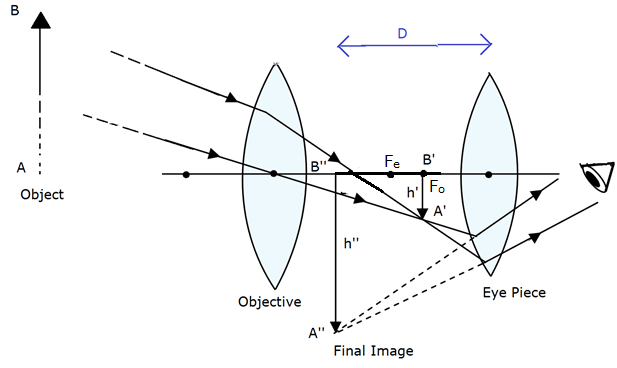
(a) A microscope is a device used to see magnified image of very small things which, a compound microscope consists of two convex lenses namely eyepiece and objective, objective lens makes enlarged the real image of object which acts as an object for eyepiece which forms virtual image of it enlarging it further but image is inverted, when final image should be at least distance of distinct vision it means the image formed by eyepiece should be at a distance of around 25 Cm or D.
The Detailed Diagram has been shown below
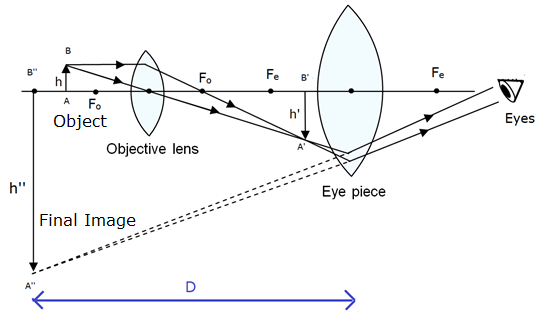
As we can see, object AB of height h is kept in front of an objective lens of focal length Fo, real magnified image is A’B’ is formed from objective lens of height h’, which acts as virtual image for eyepiece, which forms inverted magnified virtual image A’’B’’ at a distance D from lens of height h’’, i.e. the image achieves magnification and is visible to a person looking into eyepiece.
(b) Now angular magnification of a compound microscope for the final image formed at least distance of distinct is given by the relation
m = more
where m is total angular magnification, me is an angular magnification of eyepiece and mo is an angular magnification of the objective lens
so magnification becomes

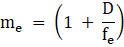
magnification of eyepiece is
Magnification of objective is
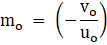
where vo and uo are image and object distance from objective lens(first image formed by objective), fe and fo are the focal length of eyepiece and objective respectively
here we are given an angular magnification
m = 30
the focal length of the objective
fo = 1.2 cm
the focal length of the eyepiece
fe = 5 cm
and least distance of distinct vision,
D = 25 cm
Now magnification of eyepiece is
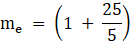
So putting values to find magnification of objective lens we get
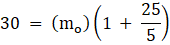
i.e. 30 = 6mo
alternatively, we get a magnification of objective lens as

Now putting the value to find a relation between the distance of image formed by objective vo and distance of the object from objective uo using
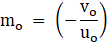
So we get

Alternatively, we can say
vo = -5uo
so using lens formula

Where u is the object distance from a lens of focal length f, and the final image is formed at a distance v from the lens
Here u = uo
v = -5uo
the focal length of the objective
fo = 1.25 cm
so putting values, we get
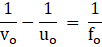
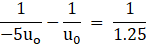
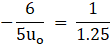
i.e. 
negative sign suggests that the object is 1.5 cm to left of the objective lens
now the image is formed at
vo = -5uo = -5 × (-1.5) = 7.5
i.e. image from the objective is at 7.5 cm distance on the right side
now this image will act as an image for the eyepiece, and the final image is formed to the left of the eyepiece at a distance D
so again using lens formula

Where u is the object distance from a lens of focal length f, and the final image is formed at a distance v from the lens
Here u = ue= ?
v = -D = -25 cm (image formed on left hand side of lens)
the focal length of the eyepiece
fe = 5 cm
so putting values, we get
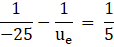
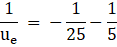

So we get the distance of the object from eyepiece (image formed by objective) as
ue = -25/6 = -4.16 cm
-ve sign suggest image is to the left of the objective the situation has been depicted in the figure
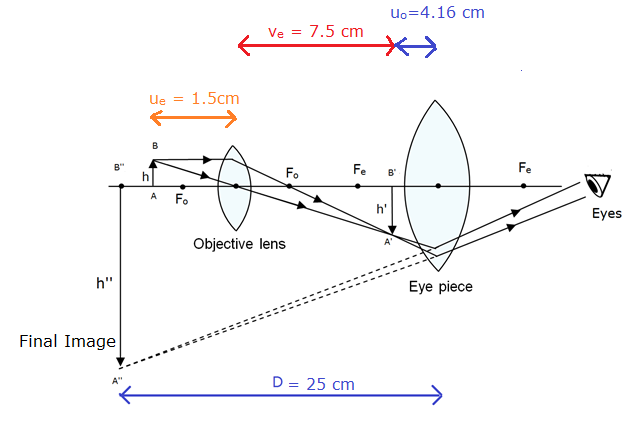
So we can clearly see the length of the microscope or distance between objective and eyepiece should be
L = ue + ve (only magnitude without sign)
i.e. the length of the microscope is
L = 7.5 + 4.16 = 11.66 Cm
And object should be kept at a distance of 1.5 cm from the microscope
OR
(a) The telescope is an optical device use to view far away objects. Clearly, it consists of two convex lenses, called as objective and eyepiece. The objective lens makes a real image of the lens in its focal plane which acts as an object for eyepiece which then forms a final image at a distance D = 25 cm from the eyepiece
The labelled diagram has been shown in the figure
As we can see, a distant object AB of height h is kept in front of an objective lens of focal length Fo, real is A’B’ is formed from objective lens of height h’, which acts as virtual image for eyepiece, which forms inverted magnified virtual image A’’B’’ at a distance D from lens of height h’’, i.e. the image achieves magnification and is Clearly visible to a person looking into eyepiece
(b) We are given an astronomical telescope having an angular magnification of magnitude 5 for distant objects. The separation between the objective and an eye piece is 36 cm, and the final image is formed at infinity, for the final image to be formed at infinity, the real image of an object made by objective lens must be formed at the focus of eyepiece, so that final image is formed at infinity
as shown in figure
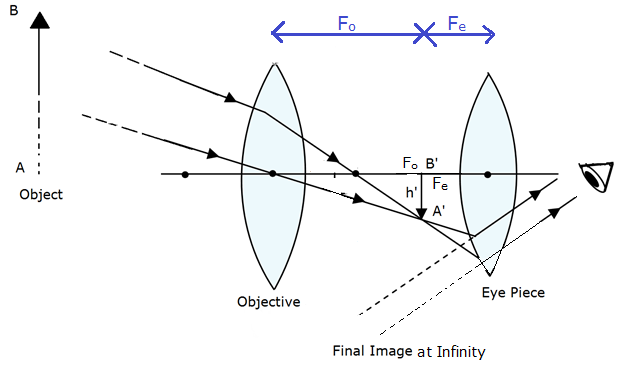
So the length of microscope or distance between eyepiece and objective will be equal to sum of the focal health of eyepiece and objective lens i.e.
L = fe + fo
L is the length of the microscope
Here L = 36 cm
fo is the focal length of objective, and fe is the focal length of the eyepiece.
Magnification of astronomical telescope when the final image is formed at infinity is given by the relation

Where m is the magnification, fo is the focal length of objective and fe is the focal length of eyepiece
Here we are given magnification as
m = 5
so we have
5 = fo/fe
Or fo = 5fe
So equation it in equation of length of telescope
L = fe + fo
36 = fe + 5fe
i.e 6fe = 36 cm
or we get the focal length of eyepiece as
fe = 36/6 = 6 cm
so focal length of objective is
fo = 5fe = 5 × 6 = 30 cm
so focal length of objective and eyepiece are 30 cm and 6 cm Respectively
Couldn't generate an explanation.
Generated by AI. May contain inaccuracies — always verify with your textbook.


